

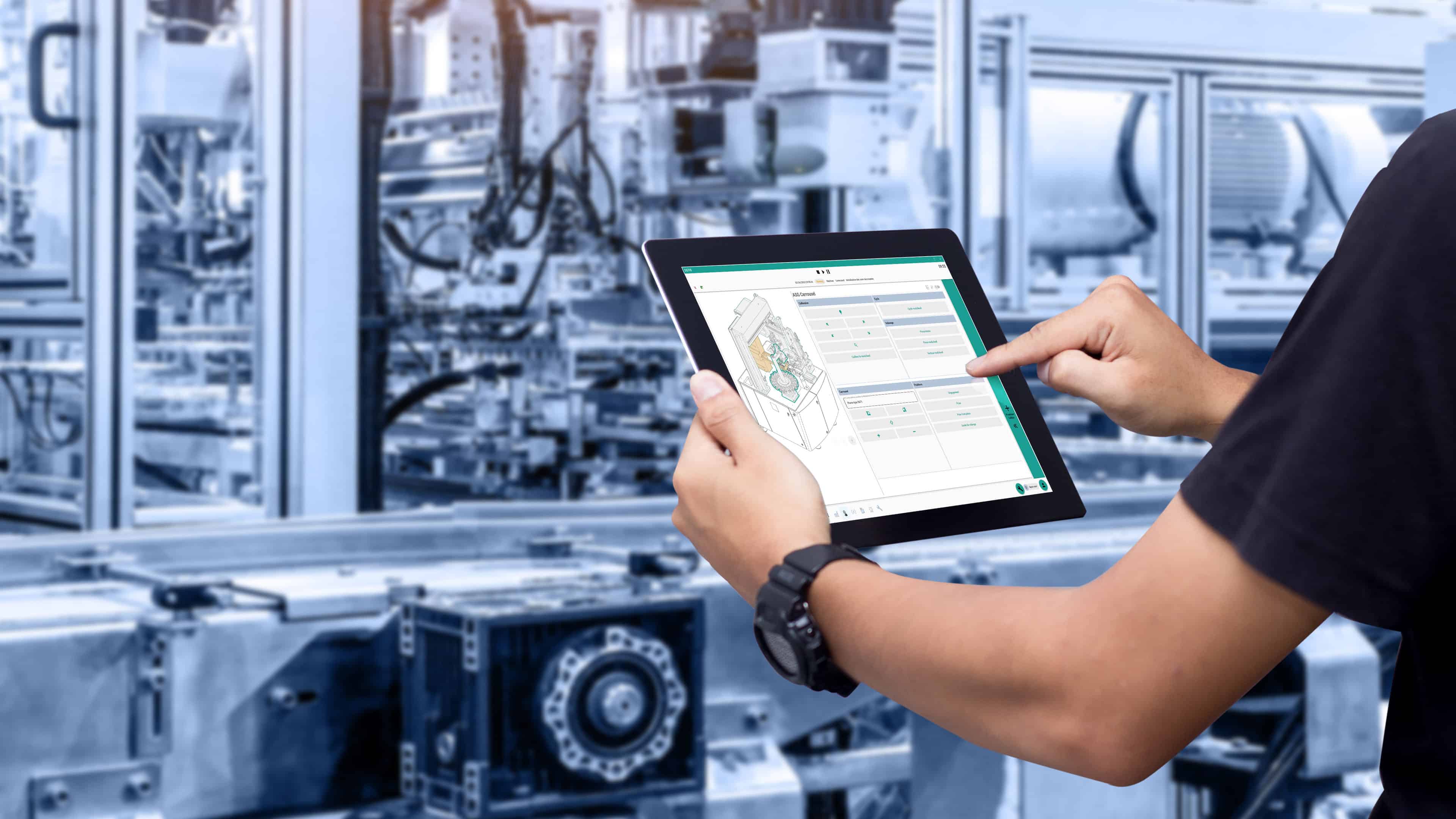
We offer a Low-Code development platform (framework) to automate the development of your industrial systems and reduce the time between design and commissioning of your production.


It is based on a scalable, modular and structured architecture, with maximum freedom from peripherals, actuators and integrated technologies. The solution also offers specific modules for machine vision, augmented intelligence and Industry 4.0.

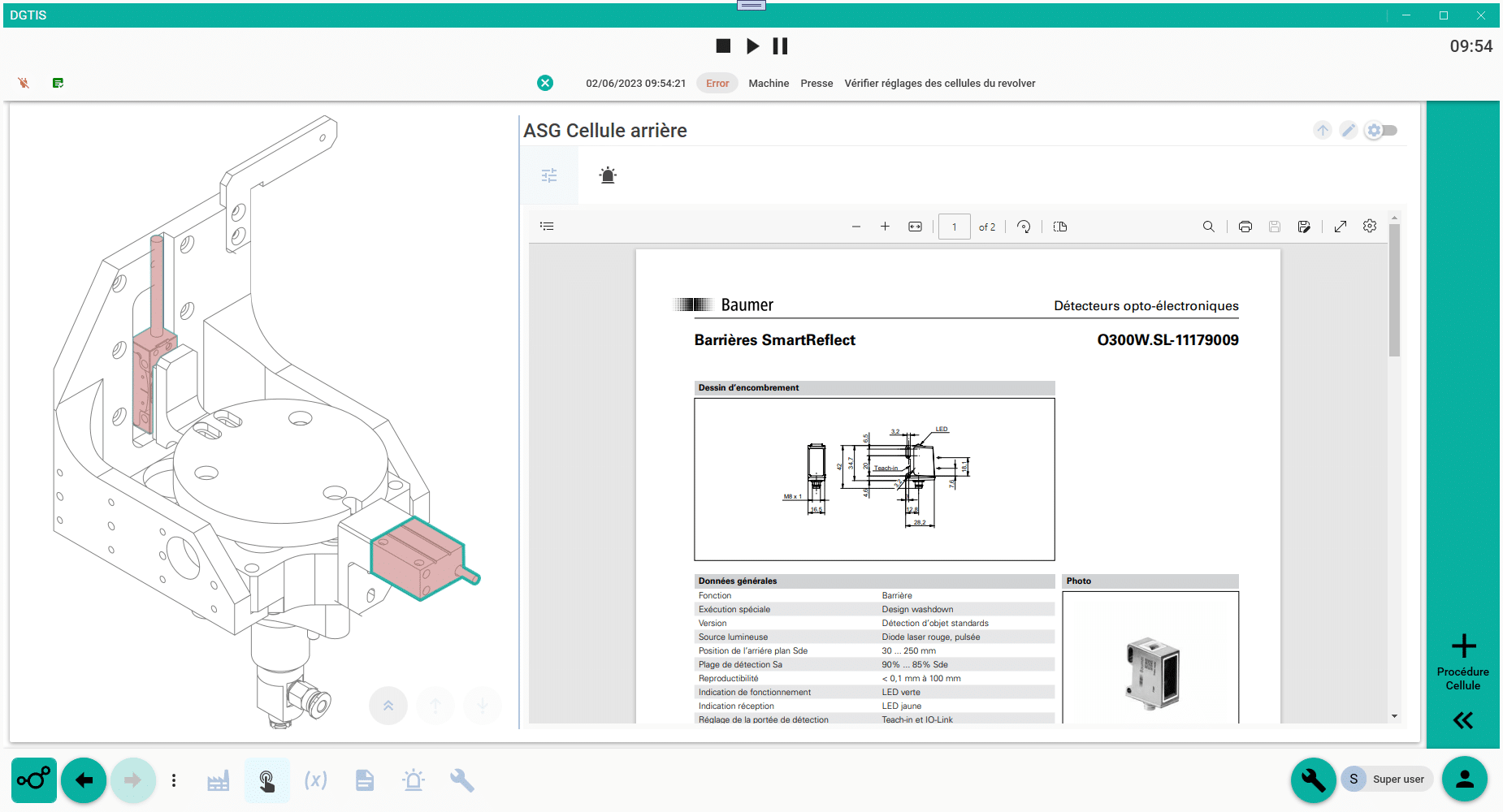
FeaturesSimple, easy navigation, intuitive ergonomics, integrated, interactive documentation, audit trail, controlled vision system, deep learning, quality control, centralized alarm management, easy-to-program integration, 2D/3D representation and much more...
Equipment control and programming software :
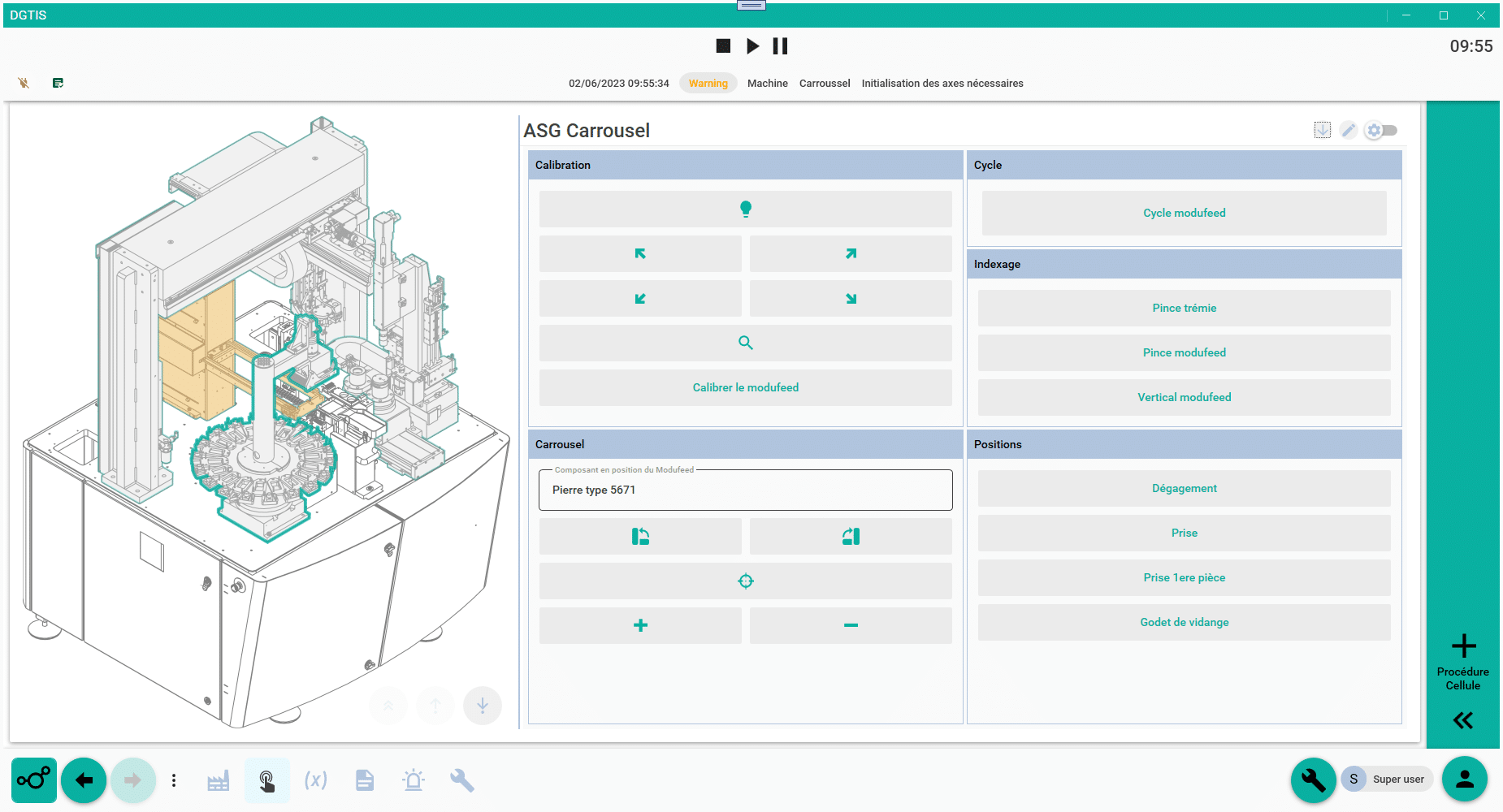
Customizable GUI: contextualized pages
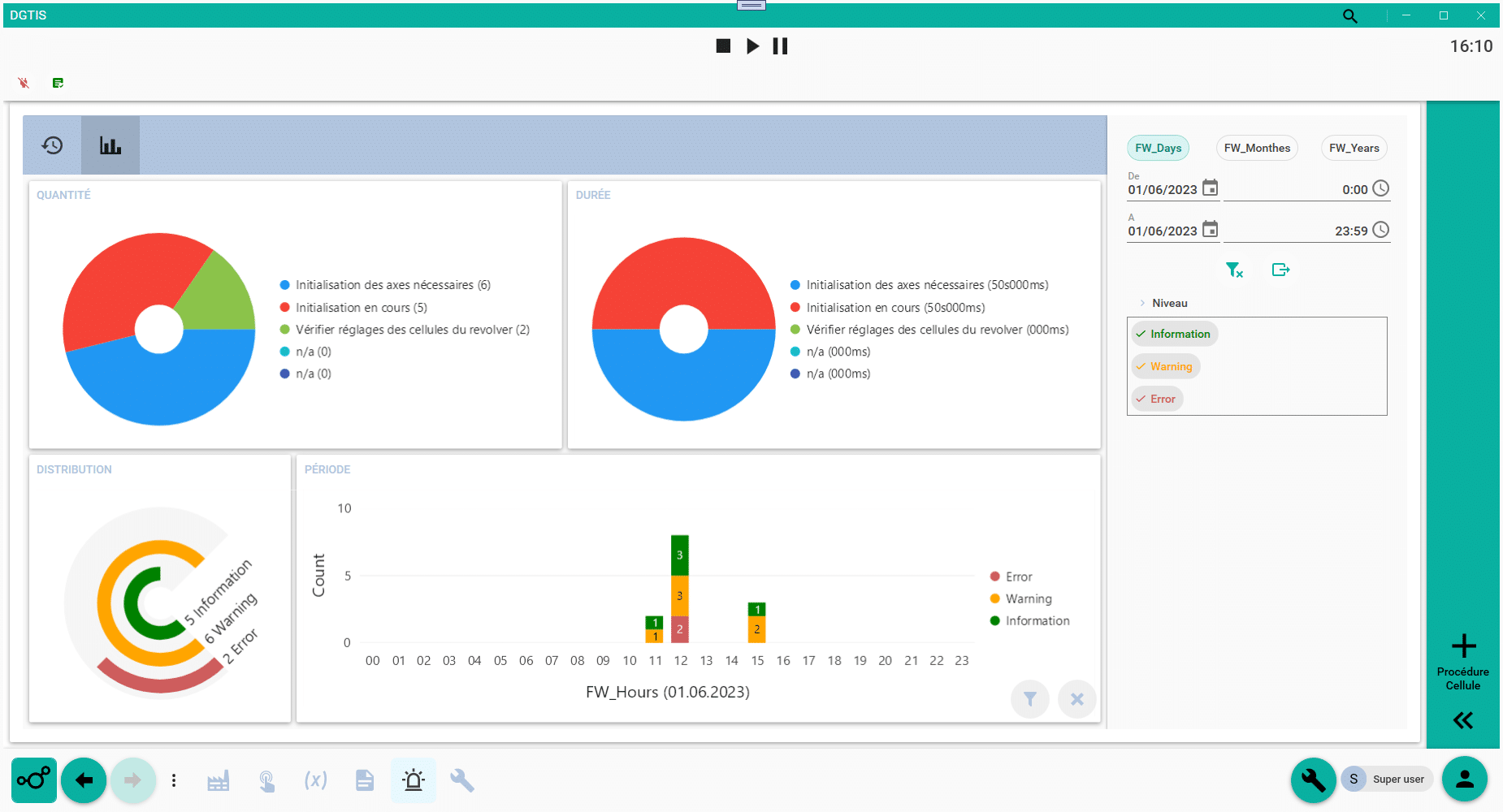
Management of alarms, recipes, audit logs, libraries, etc.
Connectors: ADS, FOCAS, OPC-UA...
Machine overview (graphic navigation)
Interactive documentation
3D Module
Traceability 21 CFR Part 11
Data centralization

Control and programming module for machine vision systems :
Business wizards with integrated editing : Cognex
Connectors: Cognex, Halcon...
Revenue management
Localization, classification, anomaly detection, character recognition (OCR), ...
AI algorithm integration

Collaborative production management module :
Predictive maintenance
Optimizing energy consumption
Data analysis
Connectors for ERP, SCADA, MES, etc.
Web interface

Human-Machine Interface (HMI): To speed up the development of your specific human-machine interfaces (HMI), dgtis has created an HMI database containing functionalities common to all your needs.
This module provides all the tools you need to create easy-to-use, highly agile applications for different environments. The platform takes into account the versatility of machines, and allows you to quickly standardize, design and contextualize your interfaces according to your user profiles.
An assembly machine software framework is a structure or set of libraries, tools and programming conventions that facilitate the development, management and maintenance of complex software for controlling and automating industrial assembly machines. It serves as the basis for creating customized machine control applications tailored to the specific needs of each user.

The benefits of a framework for machine manufacturers are manifold
Reduced development time
The framework provides prefabricated modules and out-of-the-box functionality, allowing developers to concentrate on creating application-specific functionality rather than building the basic infrastructure.
Improved quality and reliability
Frameworks are generally tried and tested, guaranteeing better quality and greater reliability of the software developed on their basis.
Code reusability
The framework makes it possible to reuse parts of the code for different projects, so you don't have to reinvent the wheel every time, and you can speed up the development of new machines.
Standardization and interoperability
The use of a common framework facilitates the integration and communication between different machines, which is essential in an industrial environment.
For end-users, using a framework also offers a number of advantages.
Customization and flexibility
Frameworks enable machine control software to be customized and adapted to the specific needs of each user or production process, improving efficiency and productivity.
Easy to maintain and upgrade
The frameworks offer a clear structure and organization, making it easy to maintain and upgrade the software over time, and to retrofit machines.
Training and support
The use of a common framework facilitates operator training and technical support, as concepts and conventions are standardized.
Integration with other systems
Frameworks facilitate integration with other industrial systems, such as production management systems (MES) or enterprise resource planning (ERP) systems.
In short, a framework in automation machine software facilitates and accelerates the development of customized machine control software, improves the quality and reliability of solutions, and offers greater flexibility and customization for machine manufacturers and end-users.
The potential savings for the assembly machine manufacturer and the end user by using a software framework are diverse and can manifest themselves in several ways:
For the machine manufacturer
Lower development costs
Using a framework reduces development time by providing ready-to-use modules and functionalities. This reduces labor costs and the resources needed to create and maintain machine control software.
Lower maintenance costs
A well-designed and structured framework facilitates software maintenance and updates, reducing the costs associated with these tasks.
Lower training costs
The standardization and interoperability offered by a common framework reduce training costs for technical staff and developers.
Reduce error-related costs
A tried and tested framework helps to reduce programming errors and quality problems, thus lowering the cost of bug fixes and reliability issues.
Competitive advantages
The use of an efficient framework can give a manufacturer a competitive edge by enabling him to develop machines faster and at lower cost, while maintaining high quality.
For the end user
Lower customization costs
Frameworks offer greater flexibility and make it easier to customize machine control software to meet specific user needs, reducing the costs associated with customization.
Lower training costs
The standardization and interoperability offered by a common framework also reduces training costs for operators and maintenance personnel.
Lower maintenance costs
The ease with which framework-based software can be maintained and upgraded reduces maintenance and support costs.
Improved efficiency and productivity
Using a framework tailored to the user's needs optimizes the efficiency and productivity of assembly machines, which in turn can reduce production costs and increase return on investment.
In short, the use of a software framework in automation machines can generate significant savings for manufacturers and end-users by reducing development, customization, training and maintenance costs, while improving machine efficiency and productivity.